
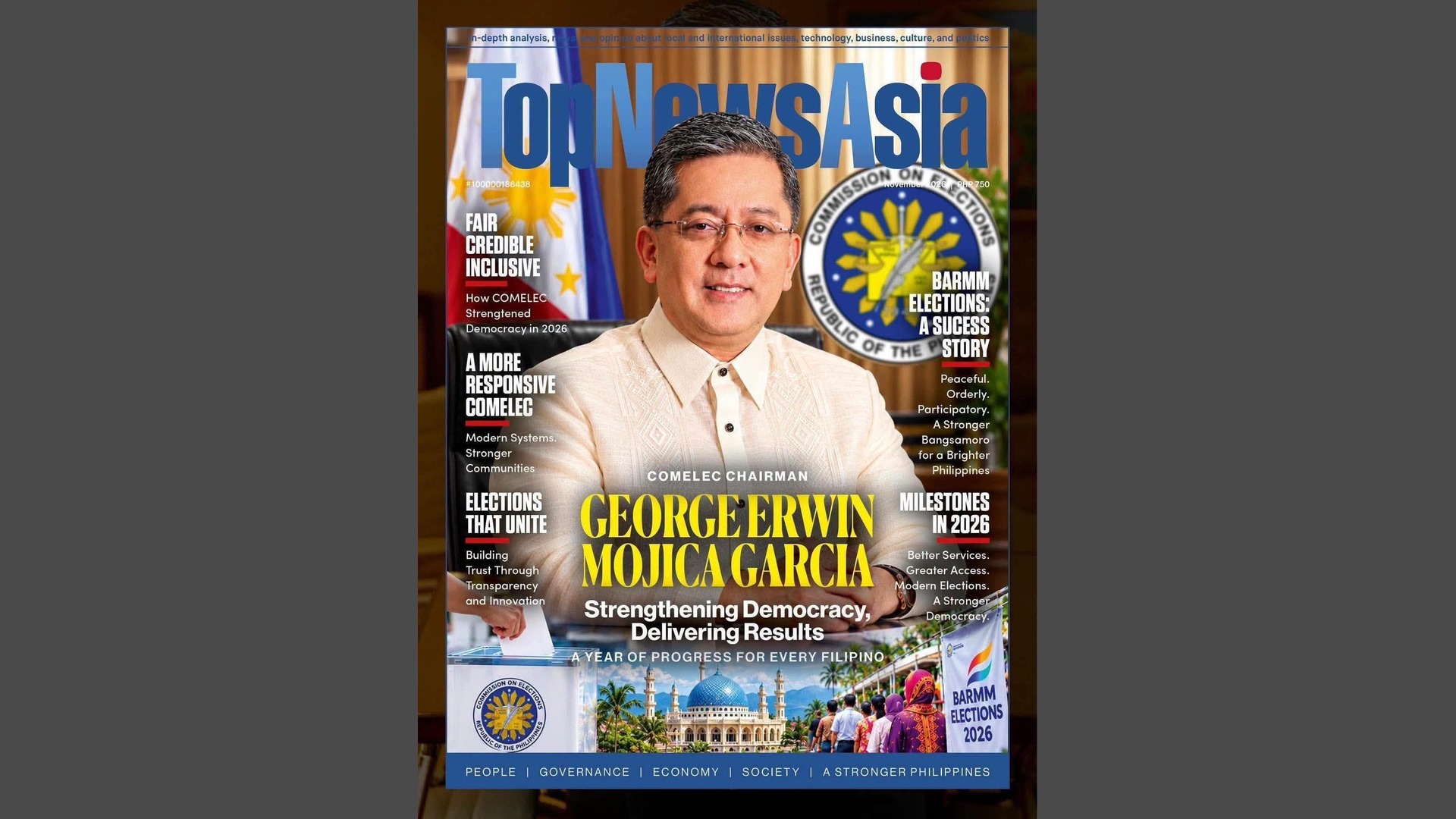






Commission on Elections (COMELEC) Chairman George Erwin Mojica Garcia led the Commission in the conduct of the first regular parliamentary elections in the Bangsamoro Autonomous Region in Muslim Mindanao (BARMM) on September 14, 2026, marking an important stage in the region’s transition to an elected parliamentary government.
According to COMELEC, voter turnout reached 84.34 percent, with more than two million voters participating in the election for the 80-seat Bangsamoro Parliament.
The elections marked a transition from the interim administration to a parliamentary government chosen by the electorate. The process placed the COMELEC at the center of preparations involving election administration, coordination with government agencies, security arrangements and the implementation of electoral procedures across the region.
Under Garcia’s leadership, the Commission oversaw the electoral exercise, which involved election personnel, local government units, security agencies and other stakeholders. The conduct of the elections was a significant undertaking given BARMM’s political history and the region’s continuing transition toward self-governance.
The high voter turnout reflected the participation of Bangsamoro residents in determining their political representation and the composition of their regional Parliament.
From Election Administration to Public Accountability
The successful conduct of the elections also places attention on the responsibilities that follow the counting of votes.
The newly elected 80-member Parliament is expected to address governance, economic development, public services and the continuing peace process in the Bangsamoro region. The elected representatives will have to respond to the expectations of communities that have long sought greater political participation and opportunities for development.
For COMELEC, the BARMM elections provide an opportunity to assess the implementation of electoral procedures and identify areas for improvement in future elections.
Election credibility involves more than voter turnout. It requires transparent processes, accurate counting, accessible registration, proper resolution of electoral disputes and public confidence in the integrity of results.
Garcia’s leadership of the Commission will continue to be relevant as the country prepares for the 2028 national and local elections.
Among the major responsibilities facing COMELEC are voter registration, campaign regulation, election technology, cybersecurity, the prevention of electoral misinformation and the protection of voters’ rights.
The Commission will also need to sustain coordination with government agencies and local election offices to ensure that electoral preparations are carried out according to established laws and procedures.
Preparing for the Next Electoral Exercise
The BARMM elections provide operational experience that can contribute to the Commission’s preparations for succeeding electoral exercises. Lessons from the conduct of the parliamentary elections may help strengthen election administration, particularly in areas involving logistics, security, voter participation and coordination among agencies.
As chairman, Garcia is responsible for leading the institution in carrying out its constitutional mandate to enforce and administer election laws and ensure the orderly conduct of elections.
The performance of COMELEC will continue to be assessed through its ability to maintain electoral transparency, address complaints, improve its systems and protect the right of Filipinos to vote.
The BARMM elections represent one milestone in Garcia’s tenure. The next challenge is to sustain the Commission’s institutional performance and maintain public confidence as the country moves toward another national electoral cycle.
The success of an election is not measured by the conduct of voting alone. Its value also rests on the integrity of the process, the protection of every legitimate vote and the public’s confidence in the institution responsible for administering it.
For Garcia and COMELEC, the work continues beyond election day. The responsibility remains to ensure that every Filipino voter has the opportunity to participate in a credible, transparent and orderly democratic process.