
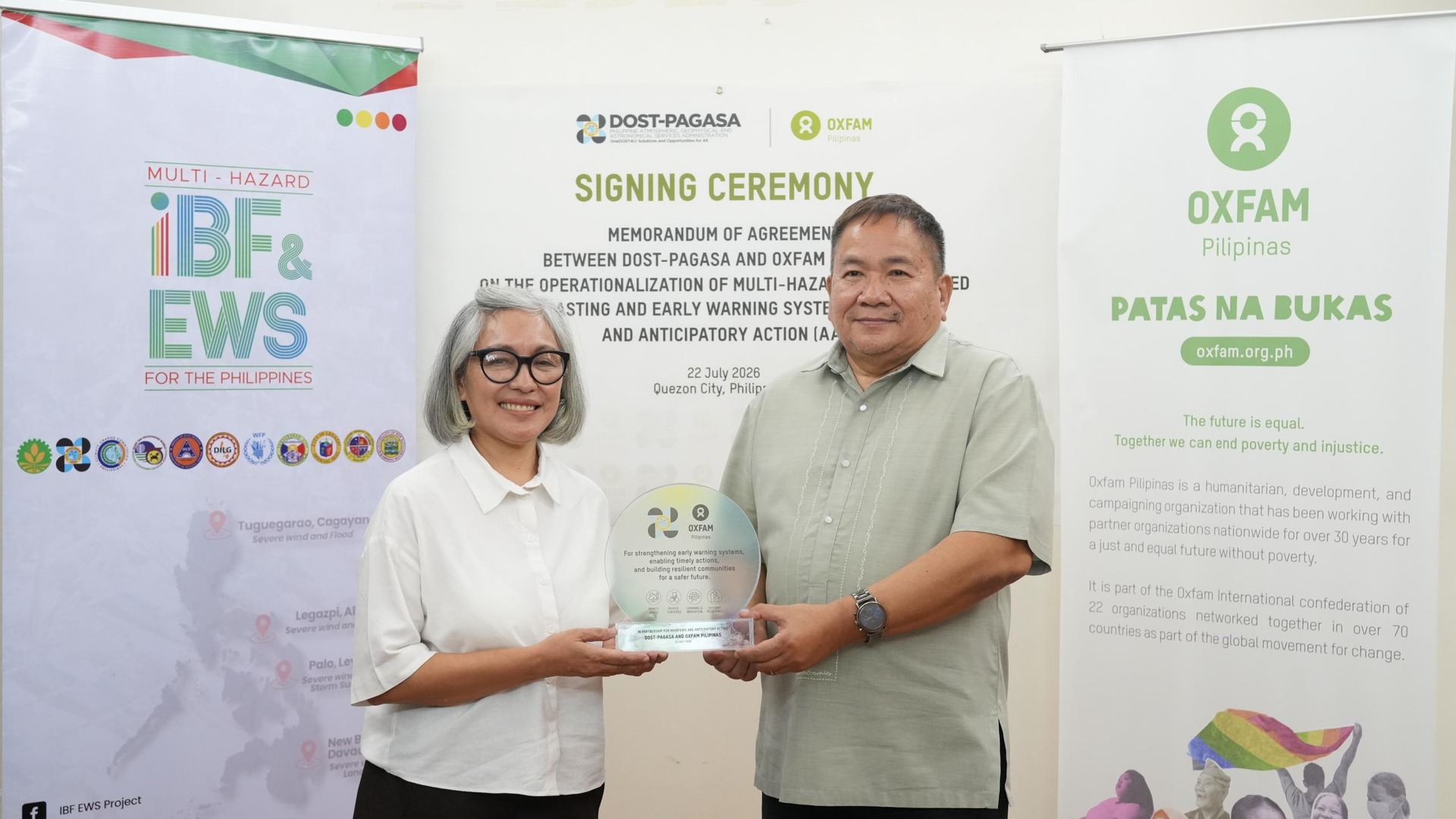






The Philippine Atmospheric, Geophysical and Astronomical Services Administration (PAGASA) and Oxfam Pilipinas signed a Memorandum of Agreement (MOA) on July 24, 2026 to strengthen Impact-Based Forecasting (IBF), forecast literacy, early warning systems, and anticipatory action as the Philippines faces increasing climate and weather risks.
The partnership supports the implementation of Republic Act No. 12287, or the Declaration of State of Imminent Disaster Act, by strengthening science-based decision-making and enhancing the capacity of national and local institutions to take early action before hazards escalate into disasters.
The agreement comes as PAGASA projects that the country may experience fewer but potentially stronger tropical cyclones as El Niño conditions are expected to persist until early 2027, underscoring the need to translate scientific forecasts into timely preparedness and anticipatory actions.
A key pillar of the collaboration is PAGASA’s Multi-Hazard Impact-Based Forecasting and Early Warning Systems (MHIBFEWS) Project, a Green Climate Fund-supported initiative that is leading the development and institutionalization of Impact-Based Forecasting in the Philippines. Through the project, PAGASA has been shifting from traditional hazard forecasting to forecasts that integrate hazard, exposure, and vulnerability information to describe the likely impacts of impending hazards on people, livelihoods, infrastructure, and critical services. This enables national agencies, local governments, and communities to make timely, risk-informed decisions and implement anticipatory actions before disasters occur.
PAGASA and Oxfam Pilipinas will jointly develop and implement learning and simulation initiatives that demonstrate climate and weather data as practical tools for disaster risk reduction and climate resilience. The partnership will further support the refinement of impact-based forecasting systems, establishment and validation of anticipatory action thresholds and triggers, conduct of climate fora and other capacity-building initiatives, promotion of data-informed decision-making, development of evidence-based policies, and stronger collaboration among government agencies, local government units, civil society organizations, academia, and development partners.
“This partnership reflects our shared commitment to ensuring that weather and climate information leads to timely decisions that protect lives, livelihoods, and communities before hazards escalate into disasters,” said Dr. Nathaniel T. Servando, Administrator of PAGASA. “Through the MHIBFEWS Project, PAGASA has been advancing Impact-Based Forecasting and strengthening the scientific foundation for anticipatory action in the Philippines. Working with Oxfam Pilipinas enables us to build on these efforts by improving forecast literacy, strengthening institutional capacities, and ensuring that scientific information is translated into coordinated early actions that reduce disaster risks.”
For Oxfam Pilipinas, the agreement reinforces its long-standing commitment to advancing anticipatory action, community resilience, and locally led disaster risk reduction in the Philippines.
“Climate change is increasing the frequency and intensity of extreme weather events, making it essential to move from reacting to disasters toward anticipating them,” said Lot Felizco, Executive Director of Oxfam Pilipinas. “By combining PAGASA’s scientific expertise with Oxfam’s experience in anticipatory action, community resilience, and policy advocacy, we can help ensure that governments, civil society, and at-risk communities have the knowledge, systems, and partnerships needed to act early and reduce disaster impacts.”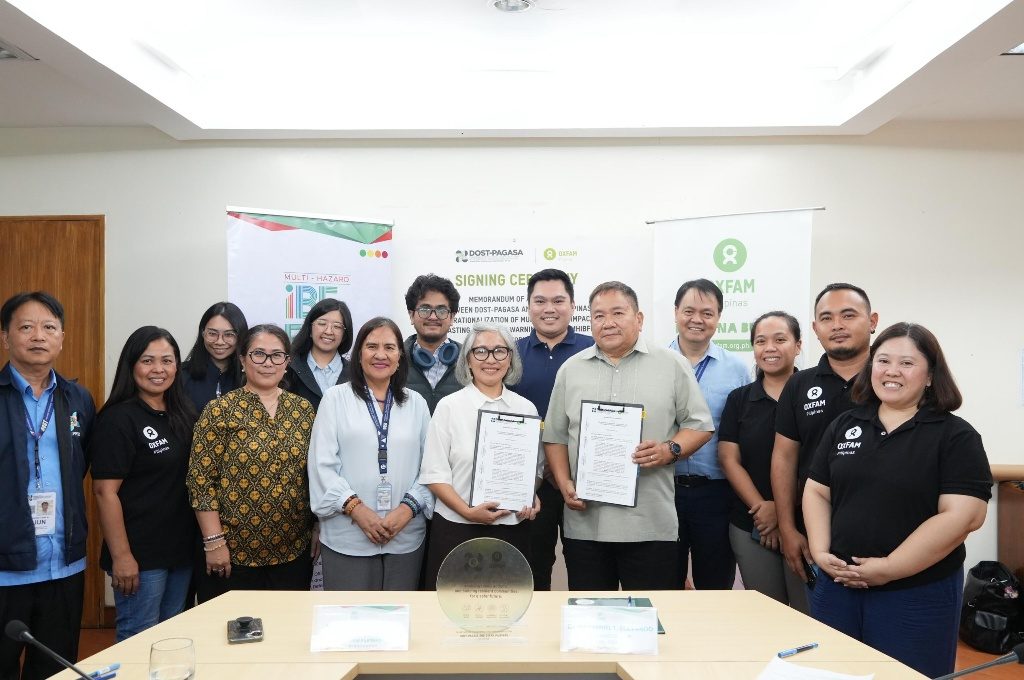
The partnership builds on years of collaboration between PAGASA and Oxfam Pilipinas in advancing anticipatory action, including support for the development of impact-based forecasting approaches, early action protocols, forecast literacy initiatives, and policy dialogues that contributed to the institutionalization of anticipatory action in the Philippines.
The agreement also backs national efforts for stronger disaster risk governance and climate resilience by ensuring decision-making at every level is better informed by integrated risk data.
With this partnership, PAGASA and Oxfam Pilipinas pledge to make anticipatory action the rule in disaster risk management, ensuring that communities receive not only timely forecasts but also the capacity, resources, and institutional support to act before disasters strike.