
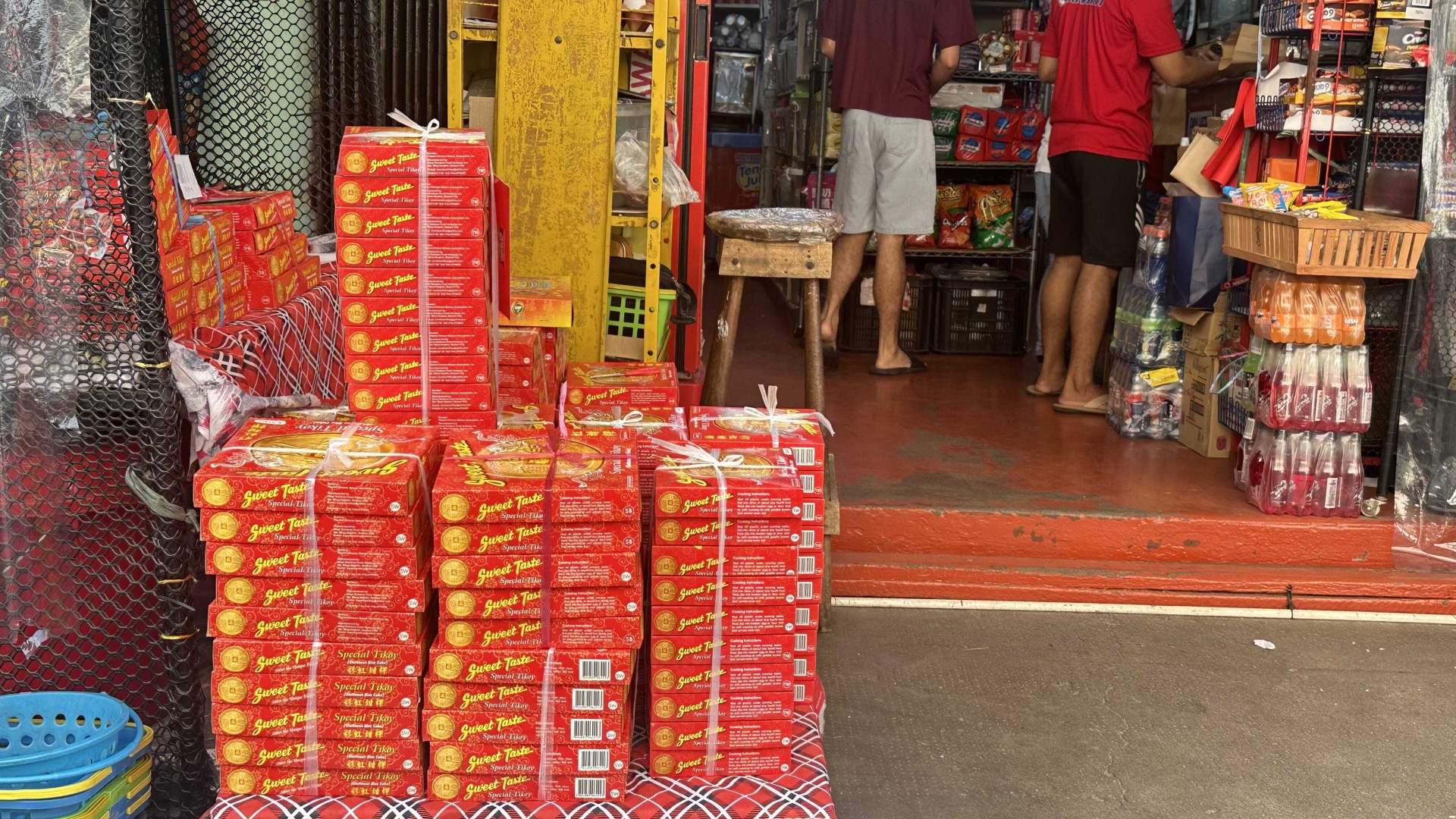






As Chinese New Year approaches, Filipinos are turning cultural traditions and ‘suwerte’ (luck) into a shopping list, fueling a sales surge in sari-sari stores nationwide as families prepare to welcome prosperity for the year ahead.
Filipino tech startup Packworks, through its business intelligence tool Sari IQ, analyzed over a million monthly transactions across its network of 300,000 stores over a three-year period. The study compared sales trends for holiday-related items two weeks before and after Chinese New Year from 2023 to 2025. The data reveals that items linked to abundance and luck, such as hopia, Chinese wíne, and Asian noodles, posted sales increases, reflecting how Filipino beliefs influence consumption during the occasíon.
Hopia, a round pastry of Chinese origin symbolizing togetherness and good fortune, steadily grew sales from 2023 to 2025. Its median gross merchandise value (GMV) rose 20% in 2025, up from 14% increase in 2023. The Visayas regions led the sales growth. Central Visayas (Region VII) saw a massive 240% spike in sales and a 200% increase in transactions in 2025. This popularity reflects the region’s enduring Chinese cultural influence, particularly in Western and Central Visayas, hubs home to significant Chinese-Filipino communities such as Iloilo, which is home to approximately 14,000 Chinese-Filipinos.
Meanwhile, Chinese wíne, often linked with holiday toasts and wishes for prosperity, saw its median GMV leap 36% in 2025, from a mere 3% in 2023. Growth was seen across most regions, with Central Luzon (Region III) maintaining a consistent 100% sales increase each year, along with Eastern Visayas, showing steadily rising growth from 72% in 2023, and highest surge of 107% in 2024 and 115% in 2025. This trend highlights the intersection of Chinese influence and the local tradition of ‘tagay’ (communal drinking).
Asian noodles, a staple symbolizing long life, saw a 10% sales increase in 2025, rebounding from a 3% decline the previous year. SOCCSKSARGEN (Region XII) recorded the highest sales in 2025 with 25% increase, likely driven by a 36% rise in stores selling the product, the highest among all regions. Western Visayas had the largest jump in transactions at 25%, reflecting the region’s Chinese culinary influences and its growing community of Chinese-Filipinos. Meanwhile, Central Luzon and Eastern Visayas continued to sustain sales growth over the three-year period, with Central Luzon recording 27% in 2023, 15% in 2024, and 17% in 2025, and Eastern Visayas showing steady although gradually decreasing growth at 28%, 18%, and 9%. These trends reflect steady top-up purchases of affordable and culturally symbolic items in sari-sari stores in these regions.
Packworks Chief Data Officer Andoy Montiel said these patterns reflect how Filipinos weave tradition into purchasing decisions.
“Our historical data underscores how deeply traditional beliefs and cultural influences are embedded in the Filipino psyche, proving that commerce is inseparable from culture. The sales trends show that for the average Filipino, Chinese New Year isn’t just a holiday, but a window for ‘investing’ in prosperity. These cultural nuances are mirrored in the sari-sari store ecosystem, proving that in our local market, heritage often leads the hand that shops,” Montiel said.
The Filipinos’ “prosperity basket” also extends to kitchen essentials used for holiday feasts. Soy sauce, a staple introduced in Chinese cuisine, saw sales rise 9% in 2025, while seasoning granules and MSG grew by 7%. Cooking oil also saw around a 13% increase in both sales and transactions. Furthermore, sweet products like chocolates and sugar, symbolizing a “sweet” year ahead, experienced notable growth. Chocolates saw a 36% boost in sales in 2025, while sugar maintained a strong presence following a massive 47% spike in 2024.
“Our latest insights prove that to stay relevant, brands and FMCGs must move beyond passive stocking and traditional distribution toward a hyper-localized, insight-led strategy. By aligning product availability with these deeply ingrained cultural cues, brands can capture the latent demand that often goes unseen in modern trade, effectively turning cultural nuances into a competitive advantage at the grassroots level,” Packworks Co-founder and Chief Platform Officer Hubert Yap said.
Packworks expects a 10% GMV growth and a 4% increase in transactions for this year’s Chinese New Year celebrations, as more Filipinos are buying the same product per transaction, particularly during the festive occasíon.
For more info about Sari IQ and to uncover more in-depth data trends in sari-sari stores, you may visit http://packworks.io/ or Packworks’ Facebook page to learn more.