
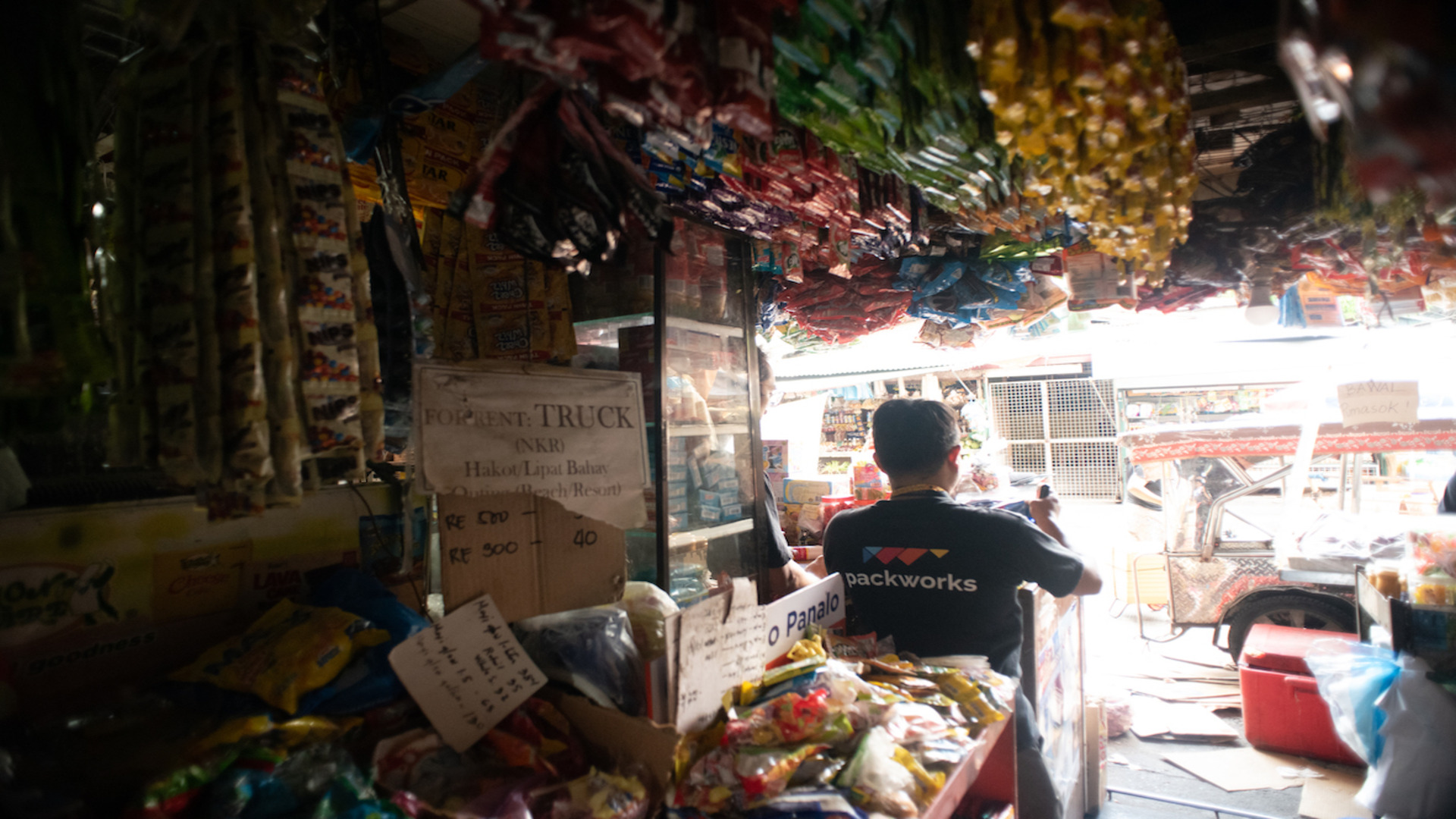






As global oil prices climb amid the ongoing Middle East conflict, sari-sari stores recorded a 90% surge in sales this March, as micro-retailers and consumers aggressively stock up against looming price hikes and delivery disruptions.
Latest insights from Filipino tech startup Packworks, derived from over 1 million transactions via its Sari.PH Pro app, reveal that Gross Merchandise Value (GMV) across its network of 300,000 stores reached PHP 3.73 billion in March, up from PHP 1.97 billion in February.
The most notable surge occurred on March 21, when GMV skyrocketed by 265%. This followed the announcement of double-digit fuel price increases on March 17, signaling a preemptive move by store owners to secure inventory before logistical costs trickled down to retail prices.
The concerns at the grassroots level are noticeable. A sari-sari store owner from Uson, Masbate, shared, “Nag-stock up kami dahil natatakot kaming maubusan ng paninda at magkaroon ng delay sa delivery mula sa mga supplier.” (We stocked up because we were worried about running out of supplies and possible delays in deliveries). In some regions, delivery lead times have reportedly stretched to three weeks, forcing retailers to prioritize bulk purchasing of fast-moving goods.
The study highlights a significant shift in grassroots consumer behavior. Traditionally driven by ‘tingi,’ or small-quantity, daily purchases, households are now consolidating trips to offset rising transportation costs. Average “basket sizes,” or the amount spent per visit, grew from a range of PHP 337 to PHP 1,097 in February to between PHP 597 and PHP 1,560 in March. While spending increased, transaction volumes grew by a modest 17%, confirming that Filipinos are making fewer but significantly larger purchases.
“With growing uncertainty and rising oil and commodity prices, our data suggests that sari-sari store owners are proactively adjusting their purchasing strategies. Larger basket sizes and increased inventory levels indicate a shift toward preparedness for potential supply disruptions and rising costs,” said Packworks Chief Data Officer Andoy Montiel.
This trend was evident across regions, with the Cordillera Administrative Region (CAR) posting the highest increase in basket size at 101.7% (PHP 773 to PHP 1,560), followed by the National Capital Region (NCR) at 85% (PHP 396 to PHP 733) and the Bangsamoro Autonomous Region in Muslim Mindanao (BARMM) at 80.2% (PHP 495 to PHP 892).
Products with highest sales included cigarettes, detergent, gín, powdered coffee, and chips and dips. Cígarettes led with an increase of around PHP 234 million, followed by detergent (PHP 116 million), gín (PHP 66 million), powdered coffee (approximately PHP 55 million), and chips and dips (PHP 45 million). Other essential goods such as soda, biscuits, powdered milk, and canned items also posted notable gains, reflecting heightened household stocking activity.
“As the backbone of local communities, sari-sari stores continue to demonstrate resilience in times of disruption. However, they remain highly vulnerable to price fluctuations and logistical challenges, highlighting the need for continued support,” said Packworks Chief Platform Officer Hubert Yap.
To learn more about how Packworks is empowering sari-sari stores nationwide, visit http://packworks.io/.